Dual Mechanism of Action

Highly selective approach targeting an unaddressed biology

CIT-013 targets ETs by binding to citrullinated Histones H2A and H4, key components of ETs. By selectively binding ET components without entering cells, CIT-013 is designed to preserve normal intracellular function.

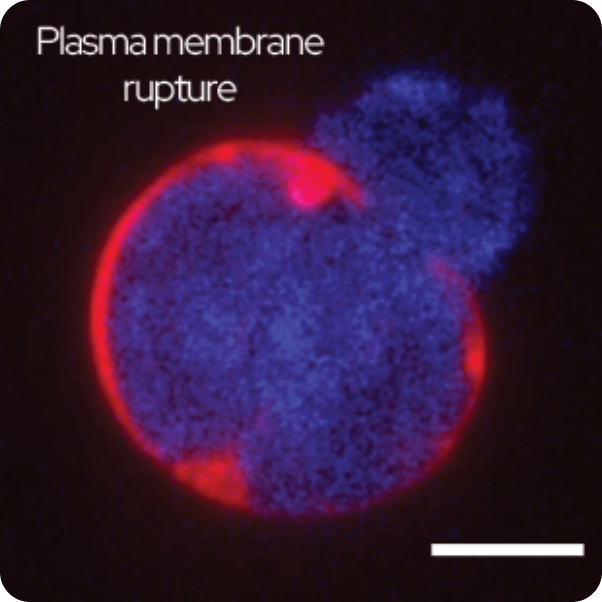
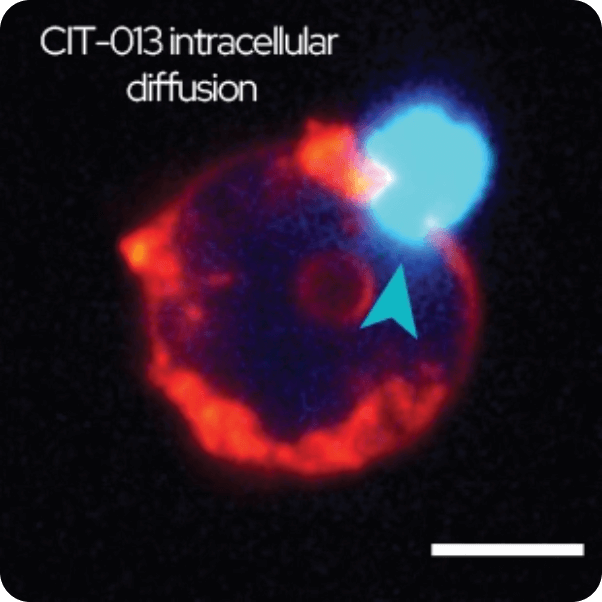
Firstly, CIT-013 acts upon the final stage of ETosis when the cell membrane becomes permeable at a discrete site to allow CIT-013 to bind its epitope on the decondensing chromatin, inhibiting, rupturing and releasing extracellular traps.

CIT-013 binding to ETs after the ETosis pathway is activated

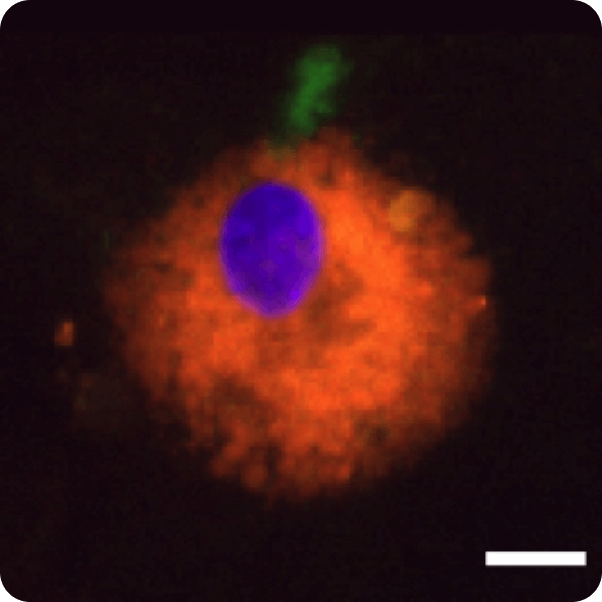
Secondly, CIT-013 binding to pre-formed ETs forms an immune complex which, because CIT-013 has a functional Fc region, engages macrophages to phagocytose the ETs.

As a consequence, CIT-013 binds both tissue ETs to enhance their clearance and also binds to ETting cells to block the production of more ETs at source, supporting resolution of the pro-inflammatory cycle driven by persistent extracellular trap accumulation.

Peer reviewed scientific publications from Citryll that support these findings can be found at
Publications

Stage 1 Stage 2 Stage 3a Stage 3b Stage 3c
Key:

CIT-013 binding to ET fragments induces phagocytosis by a macrophage

Stage 1 Stage 2 Stage 3
Key:

Clinical trial opportunities for patients

Citryll is conducting clinical trials for CIT-013, an investigational therapy developed to address Rheumatoid Arthritis (RA) and Hidradenitis Suppurativa (HS). This clinical research seeks to understand CIT-013’s potential effectiveness, safety, and impact on patient quality of life. We expect two clinical trials to start by mid 2025.